'%3e%3cpath%20d='M4.16599%206.5866V15.577C4.16599%2015.6517%204.19004%2015.7132%204.23812%2015.7613C4.2862%2015.8094%204.34764%2015.8334%204.42243%2015.8334H15.5762C15.651%2015.8334%2015.7125%2015.8094%2015.7605%2015.7613C15.8086%2015.7132%2015.8327%2015.6517%2015.8327%2015.577V6.5866H12.916V11.5225C12.916%2011.8098%2012.7974%2012.0267%2012.5602%2012.1731C12.323%2012.3195%2012.0789%2012.3285%2011.8278%2012.2004L9.99933%2011.2901L8.17083%2012.2004C7.91976%2012.3285%207.67563%2012.3195%207.43845%2012.1731C7.20127%2012.0267%207.08268%2011.8098%207.08268%2011.5225V6.5866H4.16599ZM4.42243%2017.0834C4.00684%2017.0834%203.65187%2016.9362%203.35754%2016.6419C3.06319%2016.3475%202.91602%2015.9926%202.91602%2015.577V5.83823C2.91602%205.65981%202.9446%205.48967%203.00177%205.32781C3.05892%205.16596%203.14465%205.01666%203.25897%204.87991L4.42885%203.46483C4.5656%203.28642%204.73654%203.15046%204.94166%203.05698C5.14679%202.96349%205.36367%202.91675%205.59231%202.91675H14.3903C14.619%202.91675%2014.8372%202.96349%2015.045%203.05698C15.2528%203.15046%2015.425%203.28642%2015.5618%203.46483L16.7397%204.89594C16.854%205.03269%2016.9397%205.18332%2016.9969%205.34785C17.0541%205.51238%2017.0826%205.68385%2017.0826%205.86227V15.577C17.0826%2015.9926%2016.9355%2016.3475%2016.6411%2016.6419C16.3468%2016.9362%2015.9918%2017.0834%2015.5762%2017.0834H4.42243ZM4.49131%205.33662H15.4993L14.5907%204.25487C14.564%204.22817%2014.5332%204.2068%2014.4985%204.19077C14.4638%204.17474%2014.4277%204.16673%2014.3903%204.16673H5.60033C5.56293%204.16673%205.52686%204.17474%205.49214%204.19077C5.45742%204.2068%205.4267%204.22817%205.39997%204.25487L4.49131%205.33662ZM8.33266%206.5866V10.7132L9.99933%209.87987L11.666%2010.7132V6.5866H8.33266Z'%20fill='white'/%3e%3c/g%3e%3c/svg%3e)




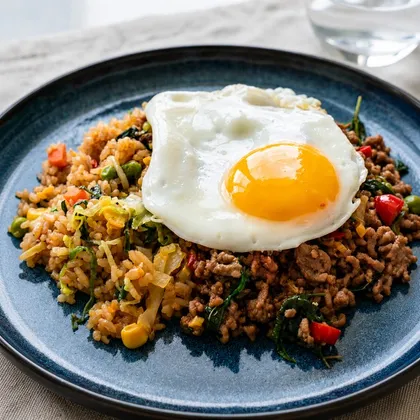
PAD KRA PAU

Servings
4 Persons

Difficulty
Easy
Ingredients
 For the Pad Kra Pau
 200 g minced pork (ground pork)
- 1 handful holy basil (alternatively Thai basil)
- 6 Thai chilies
- 6 garlic cloves
- Some neutral oil
- 1 pinch salt
- 1 tablespoon brown sugar
- Some rice wine
- Some dark soy sauce
- 1 tablespoon oyster sauce
- Some fish sauce
- 1 egg
- Some rice as a side dish
Tags
Preparation:
First, fry the fried egg and set it aside.
Crush the Thai chilies and garlic cloves in a mortar and pestle, then fry them in a little neutral oil. Add the minced pork and sear it briefly.
Season with salt and brown sugar, deglaze everything with a splash of rice wine, and gradually stir in the dark soy sauce, oyster sauce, and fish sauce.
Just before serving, fold in the basil and serve the Pad Kra Pao together with rice and the fried egg.
We have put together some classic, harmonious side dishes and accompaniments that perfectly round off the intense aroma of this Thai classic:
The Essential Base: The Right Rice
An authentic Pad Kra Pao requires a neutral component to balance the intense interplay of heat, spice, and saltiness. The ideal choice is freshly steamed jasmine rice. With its subtle floral aroma and soft yet distinct grain texture, it absorbs the savory wok sauce perfectly. Alternatively, high-quality basmati rice works well, whereas sticky or highly starchy varieties would overly dominate the delicate flavor of the herbs.
The Traditional Topping: The Thai Fried Egg
A true Pad Kra Pao is incomplete without the characteristic "Kai Dao." This is a fried egg that is practically deep-fried in plenty of hot vegetable oil. The result is a wonderfully crispy, golden-brown edge, while the yolk remains runny in the center. Once the yolk is broken at the table and flows into the meat and rice, it mellows the sharp chili notes and lends a rich, creamy depth to the entire dish.
The Refreshing Accompaniment: Fresh Vegetables
Since the main dish is very intense and meat-forward, raw vegetable elements provide a necessary balance and a pleasant freshness. Traditionally, a few thick slices of cucumber are served alongside it. The cool, hydrating texture of the cucumber naturally neutralizes the heat. Crisp, raw yardlong beans or a light, simple green papaya salad with a tangy lime dressing also harmonize beautifully.
The Flavor Finale: Condiments and Acidity
To allow for individual seasoning at the table, "Prik Nam Pla" is a must. This condiment consists of savory fish sauce, finely sliced chilies, and a generous squeeze of fresh lime juice. The added acidity from the lime cuts through the richness of the stir-fried meat and brilliantly elevates the essential oils of the Thai holy basil.
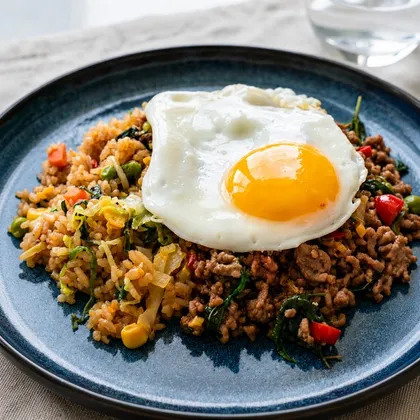
PAD KRA PAU
Servings
4 Persons
Difficulty
easy
Ingredients
- For the Pad Kra Pau
- 200 g minced pork (ground pork)
- 1 handful holy basil (alternatively Thai basil)
- 6 Thai chilies
- 6 garlic cloves
- Some neutral oil
- 1 pinch salt
- 1 tablespoon brown sugar
- Some rice wine
- Some dark soy sauce
- 1 tablespoon oyster sauce
- Some fish sauce
- 1 egg
- Some rice as a side dish
Tags
Preparation:
First, fry the fried egg and set it aside.
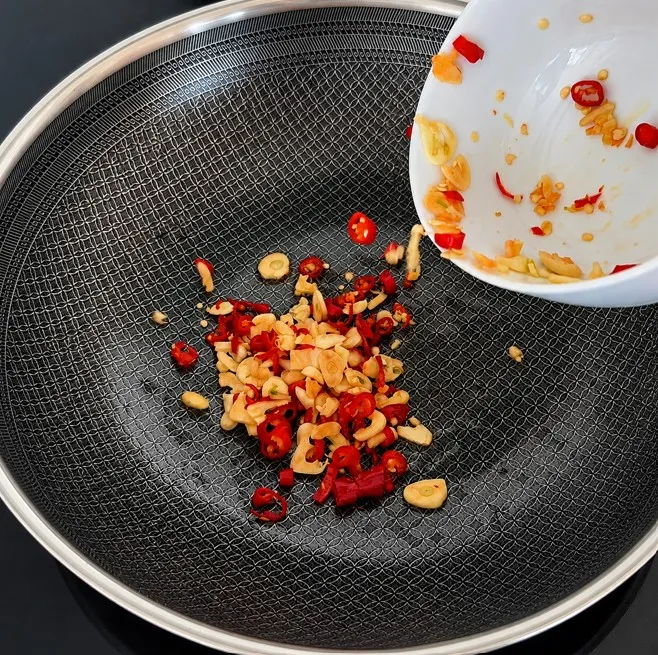
Crush the Thai chilies and garlic cloves in a mortar and pestle, then fry them in a little neutral oil. Add the minced pork and sear it briefly.
Season with salt and brown sugar, deglaze everything with a splash of rice wine, and gradually stir in the dark soy sauce, oyster sauce, and fish sauce.
Just before serving, fold in the basil and serve the Pad Kra Pao together with rice and the fried egg.
We have put together some classic, harmonious side dishes and accompaniments that perfectly round off the intense aroma of this Thai classic:
The Essential Base: The Right Rice
An authentic Pad Kra Pao requires a neutral component to balance the intense interplay of heat, spice, and saltiness. The ideal choice is freshly steamed jasmine rice. With its subtle floral aroma and soft yet distinct grain texture, it absorbs the savory wok sauce perfectly. Alternatively, high-quality basmati rice works well, whereas sticky or highly starchy varieties would overly dominate the delicate flavor of the herbs.
The Traditional Topping: The Thai Fried Egg
A true Pad Kra Pao is incomplete without the characteristic "Kai Dao." This is a fried egg that is practically deep-fried in plenty of hot vegetable oil. The result is a wonderfully crispy, golden-brown edge, while the yolk remains runny in the center. Once the yolk is broken at the table and flows into the meat and rice, it mellows the sharp chili notes and lends a rich, creamy depth to the entire dish.
The Refreshing Accompaniment: Fresh Vegetables
Since the main dish is very intense and meat-forward, raw vegetable elements provide a necessary balance and a pleasant freshness. Traditionally, a few thick slices of cucumber are served alongside it. The cool, hydrating texture of the cucumber naturally neutralizes the heat. Crisp, raw yardlong beans or a light, simple green papaya salad with a tangy lime dressing also harmonize beautifully.
The Flavor Finale: Condiments and Acidity
To allow for individual seasoning at the table, "Prik Nam Pla" is a must. This condiment consists of savory fish sauce, finely sliced chilies, and a generous squeeze of fresh lime juice. The added acidity from the lime cuts through the richness of the stir-fried meat and brilliantly elevates the essential oils of the Thai holy basil.
One of Thailand's most popular dishes: Pad Kra Pao
Pad Kra Pao is one of Thailand's most popular dishes – and for good reason. The perfect combination of savory flavors, subtle heat, and fresh basil makes every bite a delightful taste experience. With just a few ingredients, you can whip up an authentic dish that tastes like a holiday and is guaranteed to impress.
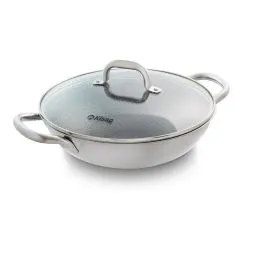
You can prepare this recipe using the following products
%20Sparsch%C3%A4ler%20Max_280x280.jpeg%3Fts=1791378341)

Jetzt Newsletter abonnieren und profitieren.
Unser Newsletter ist deine Prise Inspiration für die Küche, vollgepackt mit exklusiven Updates, spannenden Neuigkeiten, unwiderstehlichen Aktionen und feinen Rezeptideen zum Nachkochen. Jetzt abonnieren und 10% Rabatt auf die Erstbestellung in unserem Webshop abholen!