'%3e%3cpath%20d='M4.16599%206.5866V15.577C4.16599%2015.6517%204.19004%2015.7132%204.23812%2015.7613C4.2862%2015.8094%204.34764%2015.8334%204.42243%2015.8334H15.5762C15.651%2015.8334%2015.7125%2015.8094%2015.7605%2015.7613C15.8086%2015.7132%2015.8327%2015.6517%2015.8327%2015.577V6.5866H12.916V11.5225C12.916%2011.8098%2012.7974%2012.0267%2012.5602%2012.1731C12.323%2012.3195%2012.0789%2012.3285%2011.8278%2012.2004L9.99933%2011.2901L8.17083%2012.2004C7.91976%2012.3285%207.67563%2012.3195%207.43845%2012.1731C7.20127%2012.0267%207.08268%2011.8098%207.08268%2011.5225V6.5866H4.16599ZM4.42243%2017.0834C4.00684%2017.0834%203.65187%2016.9362%203.35754%2016.6419C3.06319%2016.3475%202.91602%2015.9926%202.91602%2015.577V5.83823C2.91602%205.65981%202.9446%205.48967%203.00177%205.32781C3.05892%205.16596%203.14465%205.01666%203.25897%204.87991L4.42885%203.46483C4.5656%203.28642%204.73654%203.15046%204.94166%203.05698C5.14679%202.96349%205.36367%202.91675%205.59231%202.91675H14.3903C14.619%202.91675%2014.8372%202.96349%2015.045%203.05698C15.2528%203.15046%2015.425%203.28642%2015.5618%203.46483L16.7397%204.89594C16.854%205.03269%2016.9397%205.18332%2016.9969%205.34785C17.0541%205.51238%2017.0826%205.68385%2017.0826%205.86227V15.577C17.0826%2015.9926%2016.9355%2016.3475%2016.6411%2016.6419C16.3468%2016.9362%2015.9918%2017.0834%2015.5762%2017.0834H4.42243ZM4.49131%205.33662H15.4993L14.5907%204.25487C14.564%204.22817%2014.5332%204.2068%2014.4985%204.19077C14.4638%204.17474%2014.4277%204.16673%2014.3903%204.16673H5.60033C5.56293%204.16673%205.52686%204.17474%205.49214%204.19077C5.45742%204.2068%205.4267%204.22817%205.39997%204.25487L4.49131%205.33662ZM8.33266%206.5866V10.7132L9.99933%209.87987L11.666%2010.7132V6.5866H8.33266Z'%20fill='white'/%3e%3c/g%3e%3c/svg%3e)




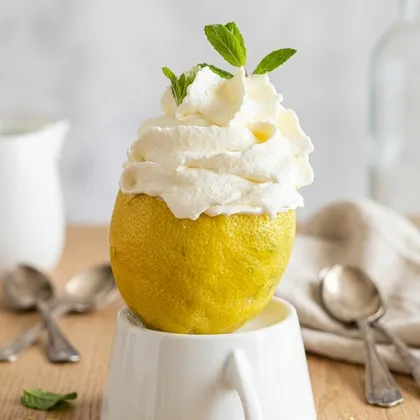
LEMON ELDERFLOWER ESPUMA

Servings
4 Persons

Difficulty
Easy
Ingredients
 For the Lemon Elderflower Espuma
 1 juice of one lemon
- 10 g sugar
- Some fresh elderberry
- Some fresh mint
- 200 ml heavy cream
Recommended Kisag products:
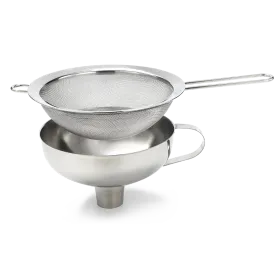
- FUNNEL & SIEVE
CHF 59.00
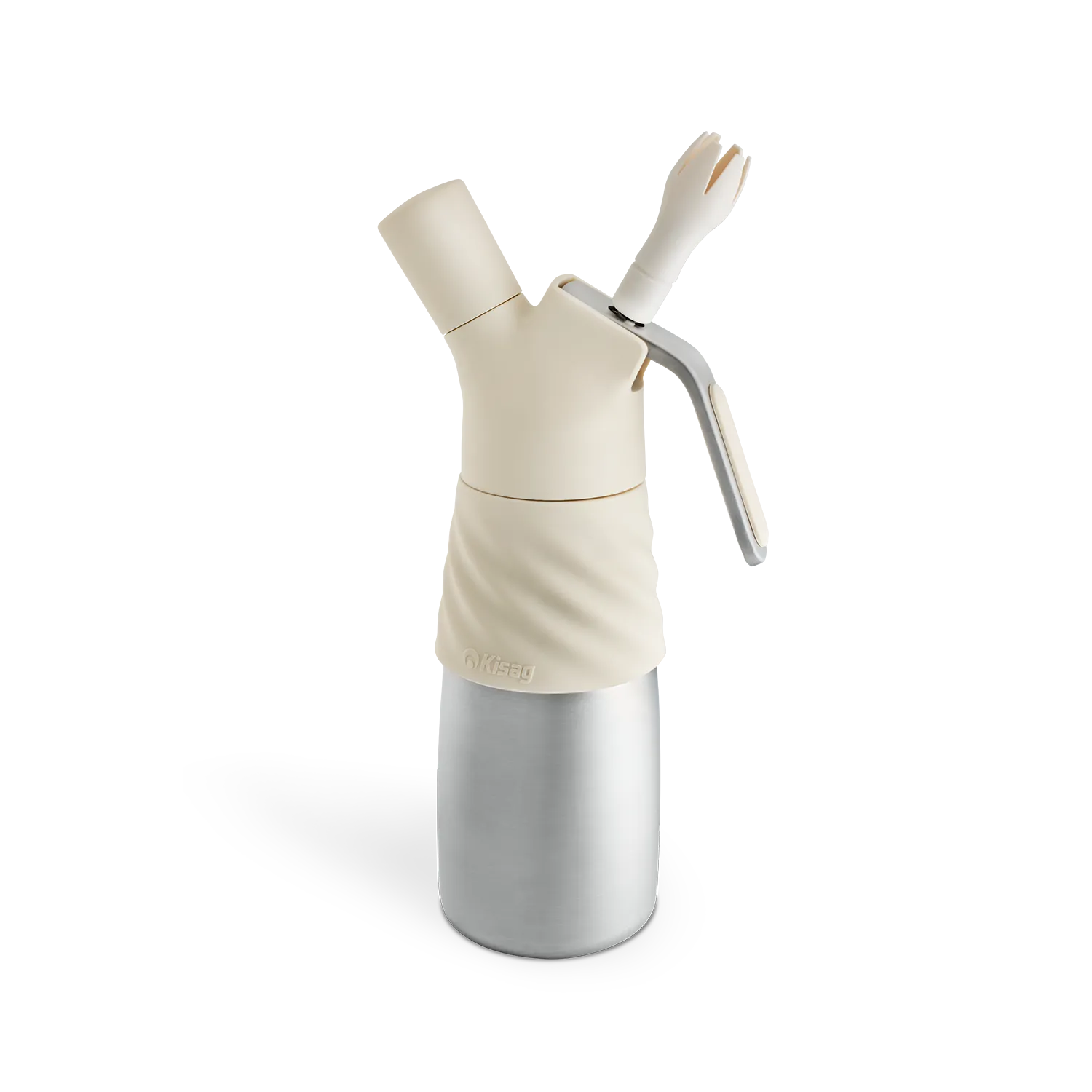
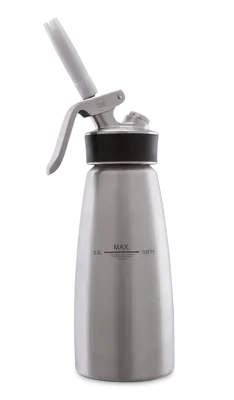
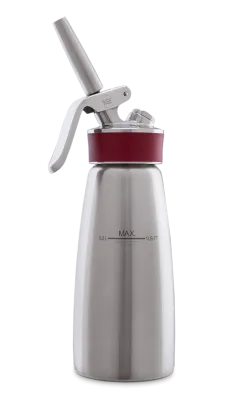
- KISAG WHIPPER BASIC 0.5L
CHF 109.00
- KISAG WHIPPER CREATIVE 0.5L
CHF 89.00
- KISAG WHIPPER CLASSIC 0.5L
CHF 139.00
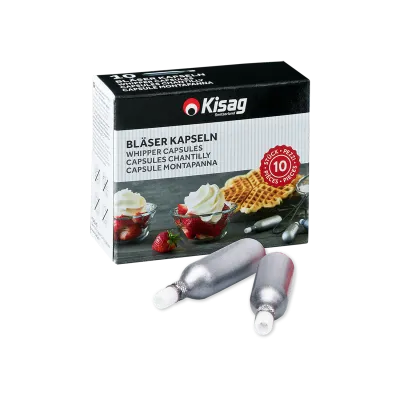
- KISAG WHIPPER CHARGERS 10 PCS.
CHF 10.90
- KISAG WHIPPER PROFESSIONAL 0.5L
CHF 149.00
Tags
Preparation:
Briefly bring the lemon juice, sugar, elderflower, and mint to a boil in a saucepan. Then, strain the liquid through a fine-mesh sieve and allow it to cool completely in the refrigerator.
Combine the reduction with the cold heavy cream, pour the mixture into a Kisag whipping siphon, and seal the device tightly. Charge it with one cream charger, shake vigorously approximately eight to ten times, and pipe the espuma into the hollowed-out lemon peel.
Garnish with fresh mint just before serving.
Due to its exceptional lightness, the acidity of the lemon, and the floral notes of the elderflower, this vibrant lemon-elderflower espuma is a highly versatile dessert for warm days. It pairs exceptionally well with the following menus, occasions, and culinary accompaniments:
After Rich Menus
Owing to its airy texture, this dessert is particularly digestible and light, making it an excellent palate cleanser after substantial meals. Following barbecues featuring rich meats, herb butter, or hearty side dishes, the fine acidity of the lemon provides a pleasant contrast and a renewed sense of lightness. Similarly, for summery pasta dishes—ranging from a classic carbonara to Mediterranean pasta variations with olive oil—the espuma forms a harmonious and elegant conclusion to the meal.
With Fish and Seafood When planning a maritime menu, the citrus note can be used as a cohesive element throughout the entire evening. This dessert is ideally suited to follow dishes featuring grilled char, trout, pike-perch, or seafood, as the combination of fish followed by the delicate acidity creates a particularly balanced and self-contained menu progression.
For Plating and Textural Pairings
Beyond being served purely on its own in a bowl, the espuma combines wonderfully with other textures. The addition of crisp baked goods such as cantuccini, butter shortbread, amaretti, or a delicate tuile provides an appealing contrast to the lightness of the foam. Furthermore, fresh berries such as raspberries, strawberries, or blueberries complement the subtle elderflower note perfectly.
As a Refined Palate Cleanser Between Courses
In fine dining, this espuma also serves as a sophisticated intermezzo. Inspired by the traditional trou normand, it functions as a modern, creamy component that refreshes the palate and neutralizes the taste buds in preparation for the subsequent course.
The Ideal Beverage Pairings
Several carefully selected options are available for the ideal beverage pairing. A dry sparkling wine, such as Prosecco, Champagne, or Cava, harmonizes excellently with the crispness of the lemon. Since the recipe already incorporates elderflower and mint, a well-chilled Hugo cocktail also represents a highly compatible accompaniment. For a non-alcoholic option, an unsweetened or lightly sweetened jasmine or green tea pairs beautifully with the floral notes of the elderflower.
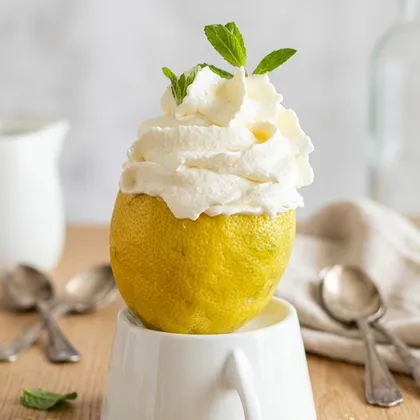
LEMON ELDERFLOWER ESPUMA
You can prepare this recipe using the following products
Preparation:
Briefly bring the lemon juice, sugar, elderflower, and mint to a boil in a saucepan. Then, strain the liquid through a fine-mesh sieve and allow it to cool completely in the refrigerator.
Combine the reduction with the cold heavy cream, pour the mixture into a Kisag whipping siphon, and seal the device tightly. Charge it with one cream charger, shake vigorously approximately eight to ten times, and pipe the espuma into the hollowed-out lemon peel.
Garnish with fresh mint just before serving.
Due to its exceptional lightness, the acidity of the lemon, and the floral notes of the elderflower, this vibrant lemon-elderflower espuma is a highly versatile dessert for warm days. It pairs exceptionally well with the following menus, occasions, and culinary accompaniments:
After Rich Menus
Owing to its airy texture, this dessert is particularly digestible and light, making it an excellent palate cleanser after substantial meals. Following barbecues featuring rich meats, herb butter, or hearty side dishes, the fine acidity of the lemon provides a pleasant contrast and a renewed sense of lightness. Similarly, for summery pasta dishes—ranging from a classic carbonara to Mediterranean pasta variations with olive oil—the espuma forms a harmonious and elegant conclusion to the meal.
With Fish and Seafood When planning a maritime menu, the citrus note can be used as a cohesive element throughout the entire evening. This dessert is ideally suited to follow dishes featuring grilled char, trout, pike-perch, or seafood, as the combination of fish followed by the delicate acidity creates a particularly balanced and self-contained menu progression.
For Plating and Textural Pairings
Beyond being served purely on its own in a bowl, the espuma combines wonderfully with other textures. The addition of crisp baked goods such as cantuccini, butter shortbread, amaretti, or a delicate tuile provides an appealing contrast to the lightness of the foam. Furthermore, fresh berries such as raspberries, strawberries, or blueberries complement the subtle elderflower note perfectly.
As a Refined Palate Cleanser Between Courses
In fine dining, this espuma also serves as a sophisticated intermezzo. Inspired by the traditional trou normand, it functions as a modern, creamy component that refreshes the palate and neutralizes the taste buds in preparation for the subsequent course.
The Ideal Beverage Pairings
Several carefully selected options are available for the ideal beverage pairing. A dry sparkling wine, such as Prosecco, Champagne, or Cava, harmonizes excellently with the crispness of the lemon. Since the recipe already incorporates elderflower and mint, a well-chilled Hugo cocktail also represents a highly compatible accompaniment. For a non-alcoholic option, an unsweetened or lightly sweetened jasmine or green tea pairs beautifully with the floral notes of the elderflower.
You can prepare this recipe using the following products


Jetzt Newsletter abonnieren und profitieren.
Unser Newsletter ist deine Prise Inspiration für die Küche, vollgepackt mit exklusiven Updates, spannenden Neuigkeiten, unwiderstehlichen Aktionen und feinen Rezeptideen zum Nachkochen. Jetzt abonnieren und 10% Rabatt auf die Erstbestellung in unserem Webshop abholen!